Building Tips
Electrical Conduit Prior to Slab Pour
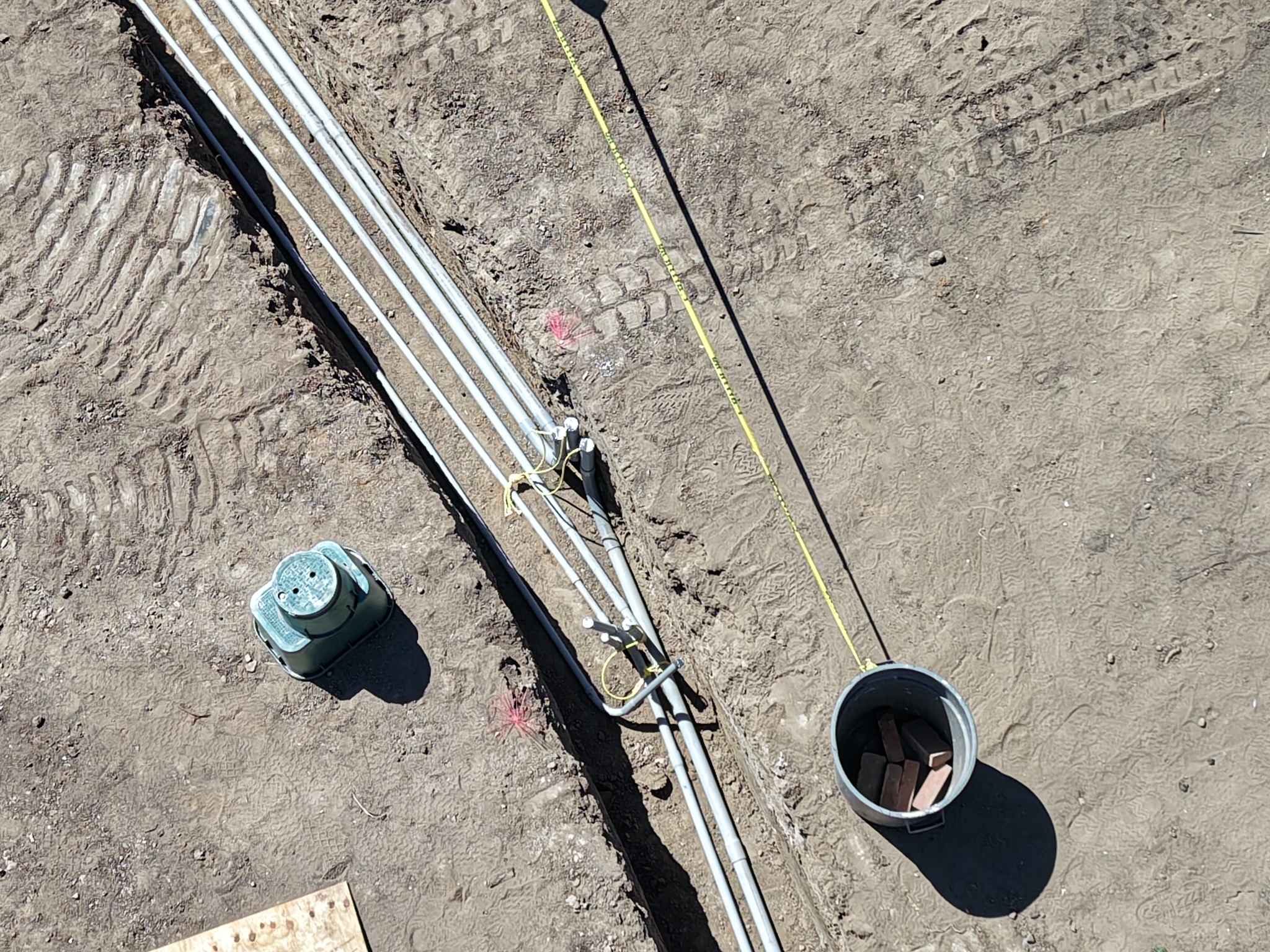
Every wire that will ever feed this house has to know its path before the concrete does. Conduit cast into a slab is permanent infrastructure - once the pour goes down, the empty pipe in the ground is the only route any future wire will ever take. Get a run wrong and there is no field fix. So before anyone trenches, we map every feed: where it starts, where it ends, what it carries, and why.
During excavation for the foundation grade beams, we meet on site with our electrical, low voltage, and solar contractors to finalize the conduit plan. That meeting confirms the scope across all three trades, the points where their systems have to integrate, and every wire run the home will need - inside and out - before the dirt closes up.
Map the whole thing before anyone digs
The map comes first because the trades share the dirt. Line voltage, low voltage, and solar all land in the same foundation, and a conduit drawn in isolation is a conduit that fights the rebar cage or dead-ends under a footing. One coordinated plan covers every panel location, every appliance home-run, and every stub-out for work that is years away. One map, all three trades.
Everything passes the transfer switch first
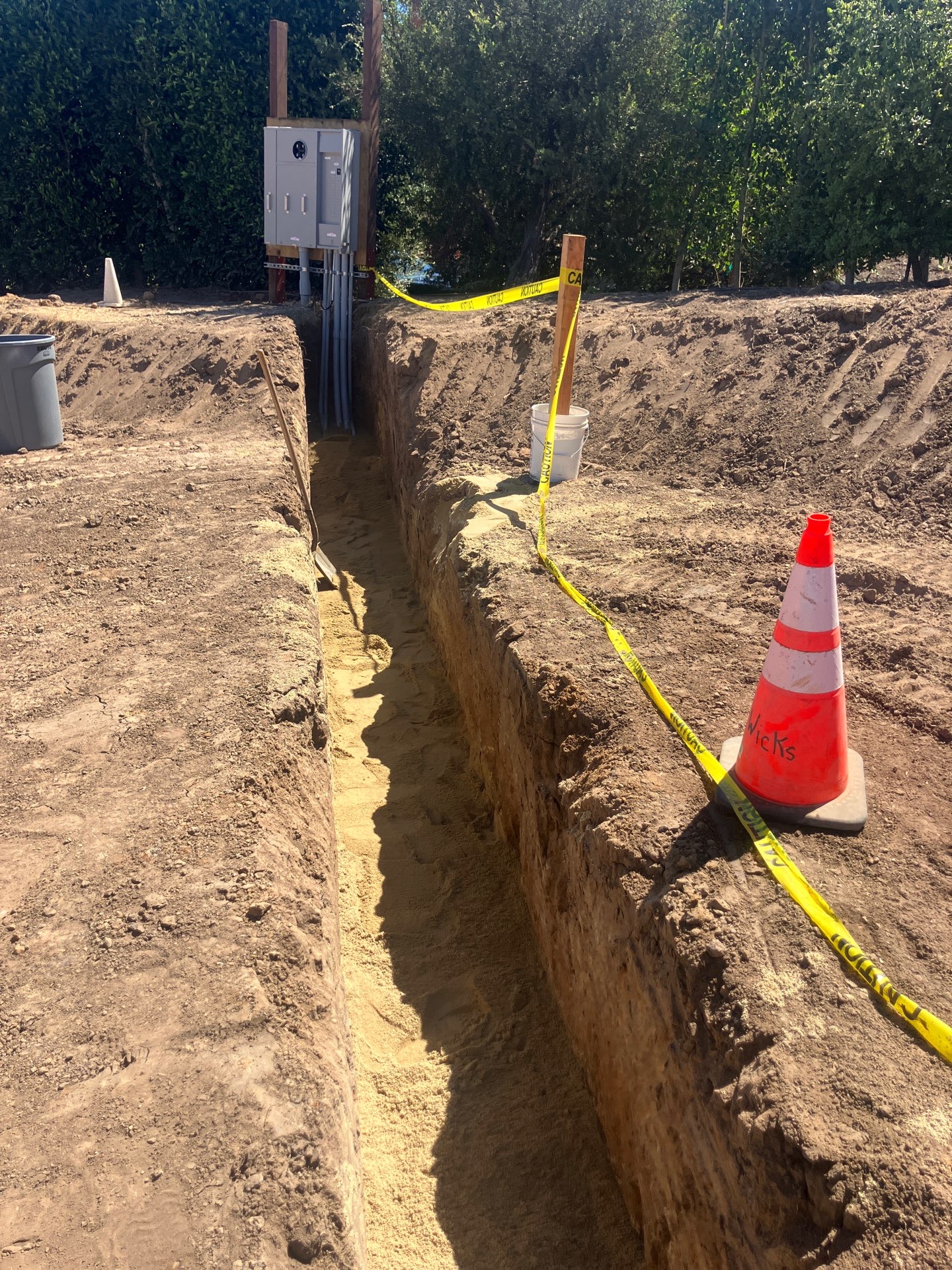
We use Franklin aGate transfer switches as the brain of the site. Every power source - the standby generator, the solar batteries, and the 400A city service - routes to the aGates first, and they switch between sources on their own so the house never drops power.
The service lands in a ground box in the driveway, runs to the transfer switches in the garage, then comes back to the ground box and on to two 200A subpanels - one for the main house, one for the guest quarters. The conduit that carries the feed out and the conduit that carries it back both have to be in the slab before the pour.
Split the load to shorten the runs
A panel in the right place saves copper. Rather than home-run every outlet and switch back to the garage, we feed the big dedicated appliances - range, dryer, future heat pump - straight off the 200A panel on short, direct runs, then send a single sub-feed to a 125A panel set in the center of the house. That center panel branches all the general plugs and lighting.
Dozens of circuits from a center panel are far shorter than the same circuits dragged to a corner. Less copper, less voltage drop, cleaner pulls. Put the panel where the loads are.
Comm gets its own path
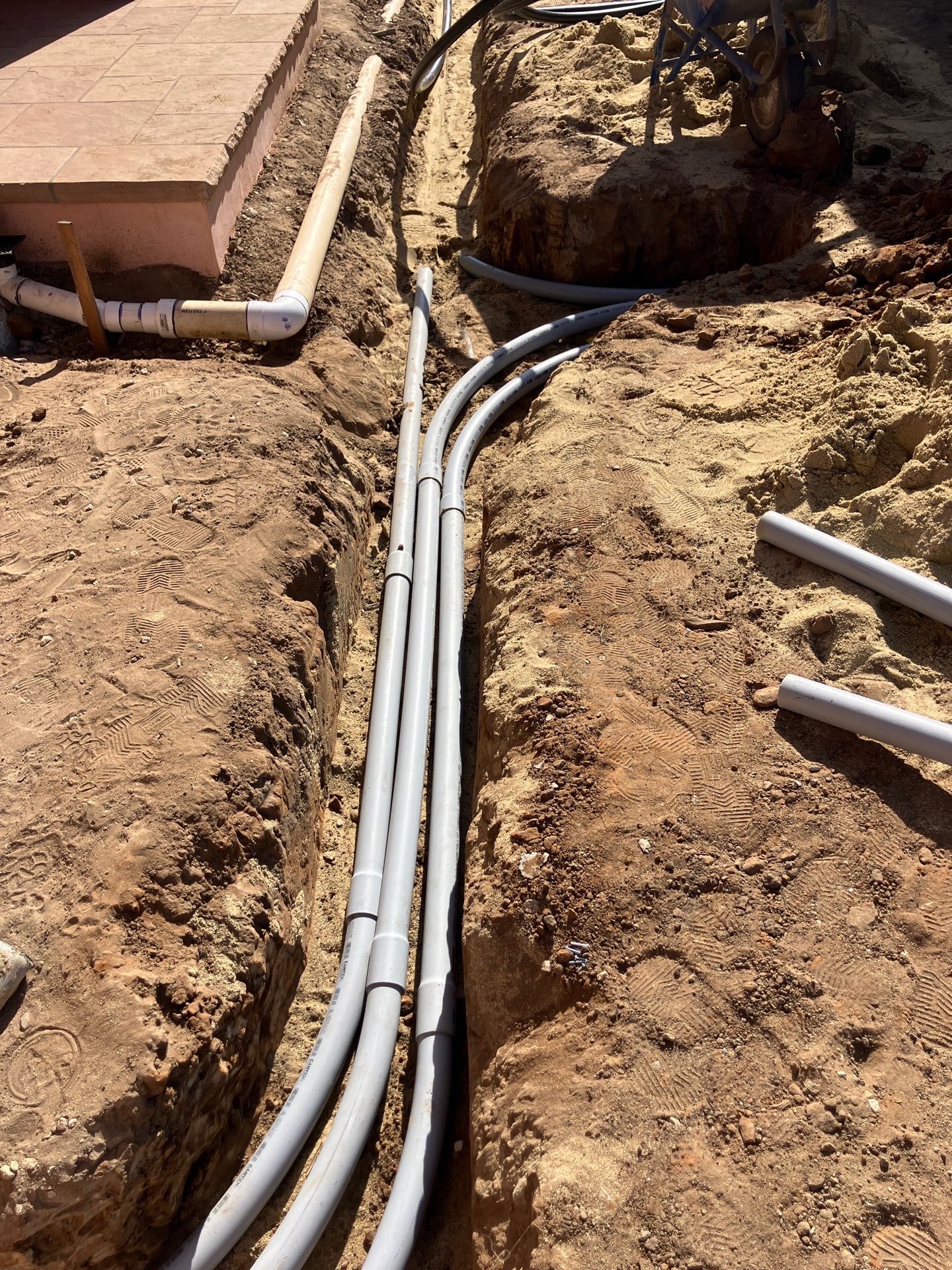
Power induces noise on a data line, so low voltage rides its own path start to finish. Phone, cable, internet, security, and AV cabling run in their own conduits, clear of the power feeds. The street’s phone and cable supply enters at a pedestal, drops into a ground box, and runs to the demarcation point - the box where the utility’s responsibility ends and ours begins.
From the demarc, a trunk runs to the structured-media rack that acts as the home’s internal hub - the router, the switches, the AV gear. Land every outside service in one organized box, branch from there, and the system is easy to test and easy to upgrade.
Bends and rebar decide whether the wire pulls
A conduit you can’t pull wire through is a buried mistake. Two field rules keep every run pullable. First, the bends: a single run gets no more than 360 degrees of total bend - the equivalent of four 90s - and that count includes the sweep coming up out of the slab. Stack more than that and the friction wins; the wire stops halfway. When a route needs more turns, it gets a pull point.
Second, the conduit and the rebar cage have to coexist without compromising either one. Conduit crosses the cage perpendicular - over the steel, never run alongside it inside the member - and stays held off the bars by the clearance the structural engineer calls out. The pipe is there to carry wire, not to displace the steel that carries the load. We run Schedule 40 PVC rated for underground and sun, and where a stub comes up into the open we step up to the heavier wall that takes a hit. Two rules, and every run pulls.
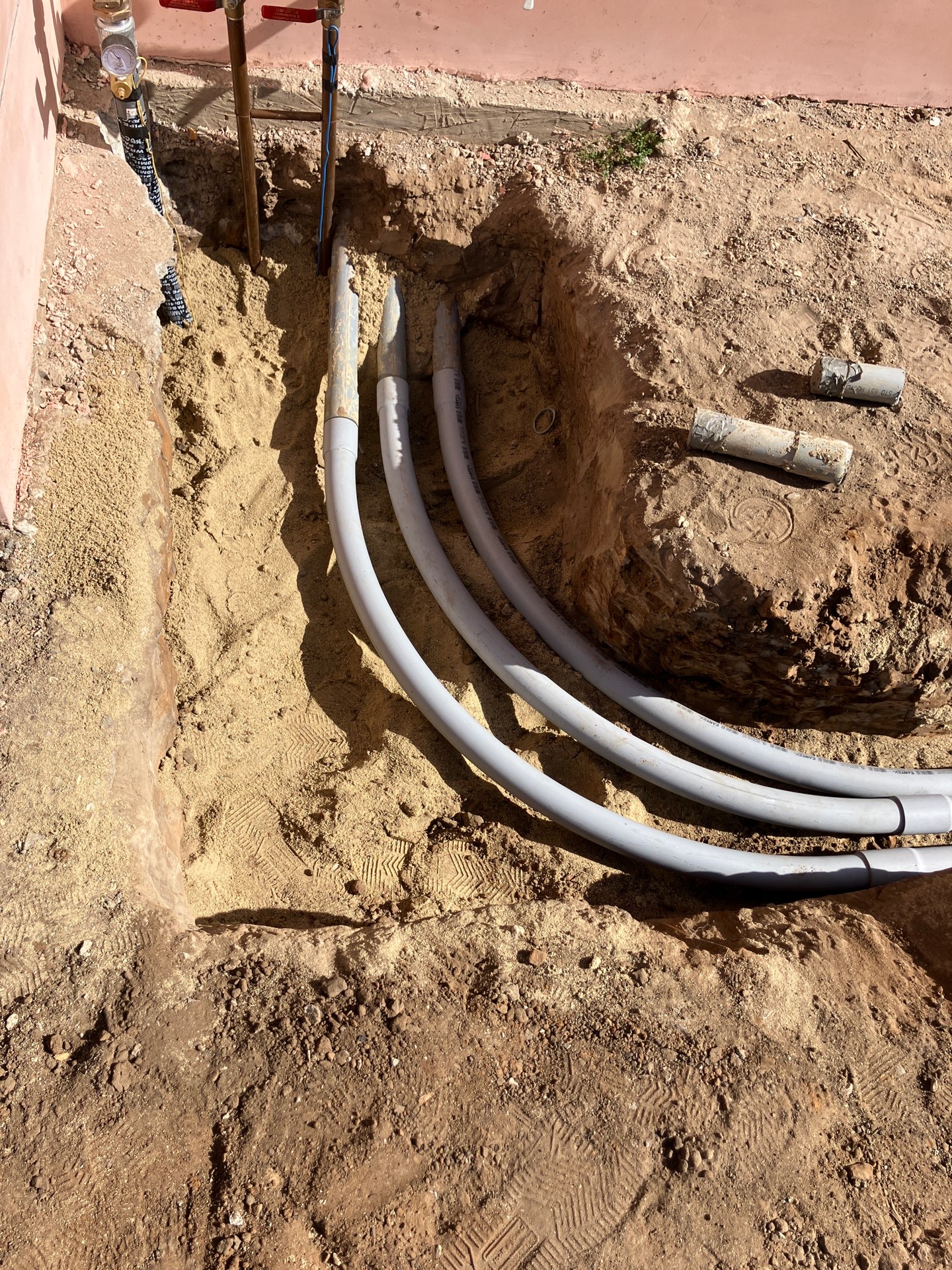
Leave a pull string in every run and one spare pipe in every trench. Both cost a few dollars now, and both pay off later: faster pulls, and a feed you would otherwise have forgotten.
Stub out for the future
The cheapest conduit you will ever install is the one you run today for a load that does not exist yet. Before the pour we stub and cap pipe for the things the owner may add later - a heat-pump location, an entry gate, yard power, low-voltage landscape and irrigation, even a spare run held for a future pool. Each one is a capped pipe waiting in the slab.
It is the same logic that lets a build go in phases - a feed roughed in early can re-route through a new transfer switch later without opening the ground twice. The pipe you set with foresight is the pipe you never have to dig up.
Key Takeaways
- Map all three trades on one plan - line voltage, low voltage, and solar share the slab; coordinate before anyone trenches.
- Every power source passes the transfer switch first - grid, solar, battery, and generator all feed the switch, then the panels.
- Put the distribution panel where the loads are - a center panel off a single sub-feed shortens dozens of runs at once.
- Keep low voltage and power on separate paths - and land outside services at one demarc for easy testing and upgrades.
- Two field rules keep every run pullable - 360 degrees of total bend per run including the sweep, and perpendicular crossings held off the cage so the conduit never compromises the steel.
- Stub and cap for the future - an extra pipe in an open trench is cheap; trenching a finished slab is not.
This is one layer of the foundation. The cage it threads through is the skeleton under the slab, the hardware cast alongside it is the steel you never see, and the service that feeds it starts with a 400A utility upgrade.