Building Tips
Electrical Utility Upgrades: 400A Service Installation
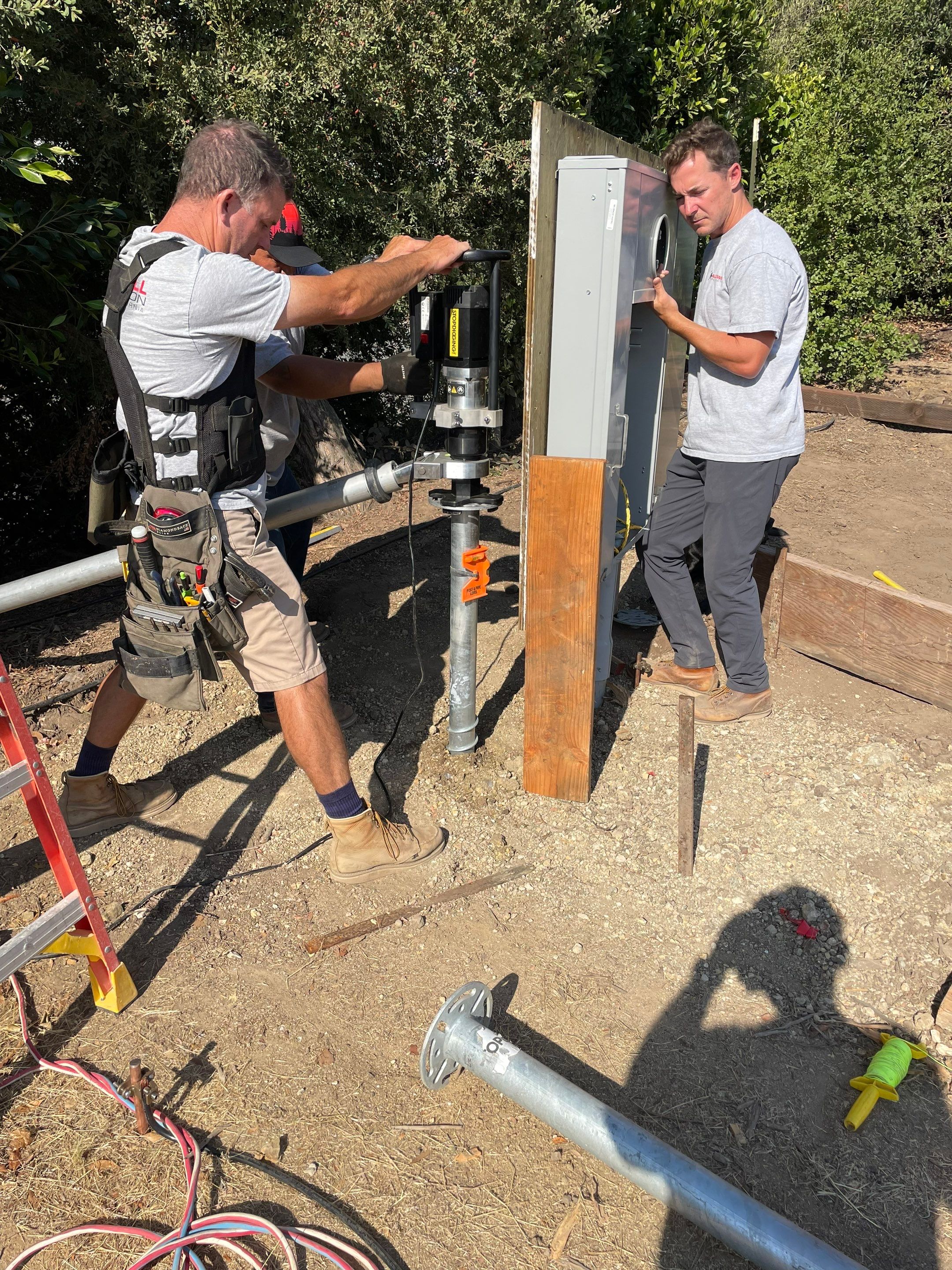
Our 400A service passed utility and city inspection. We’re set to energize. Here’s how the system is laid out and how we got it done.
The service starts with an underground conduit from the street transformer to our 400A meter/main. From there, 2”, 1-1/2”, and 1” conduits stub to the 400A for sub-feeds. A pull box sits between the 400A main and the 200A panel where the two 2” conduits meet.
Pulling Conductors
We spool conductors on the ground, measure, tie to pull rope, and pull through the 2” sleeves to the 400A main and 200A panel.
- Set makeup: two hots, neutral (if any 120/240 loads), and an equipment ground per run
- Tools: swivel and wire lube; protect insulation at entries and keep bend radii honest
If the 200A panel is a subpanel, neutrals float (isolated bar) and grounds bond to the panel can. Main bonding happens at the service disconnect (400A meter/main), not in the sub.
Terminations
With conductors pulled, we land them on the bus bars (hots) and ground/neutral bars per label.
- Torque every connection to spec
- Label each feeder at both ends
- Tails landed and neatly coiled for final connection after utility work
Confirm conductor sizes vs. breaker ratings and conduit fill before the pull. Keep a spare pull string in the raceway for future work.
Utility Coordination
The utility construction team pulls from the transformer to our 400A main. After their work and the next inspection, we tie the two systems together and energize.
Our SOP
- Conduit layout — pull box sized for the run
- Pull — rope, swivel, lube; protect insulation; keep total bends under 360 degrees
- Land — torque, label, dress conductors; neutral/ground rules followed
- Document — panel labels, torque log, conductor IDs photographed
- Energize — utility pulls, final inspection, tie systems together
Why This Matters
Electrical momentum is planning and cleanliness. Good pulls, correct terminations, and clear coordination with the utility keep us from re-opening panels and burning days chasing small mistakes.