Building Tips
Strong-Walls: Shear Strength in Narrow Spaces
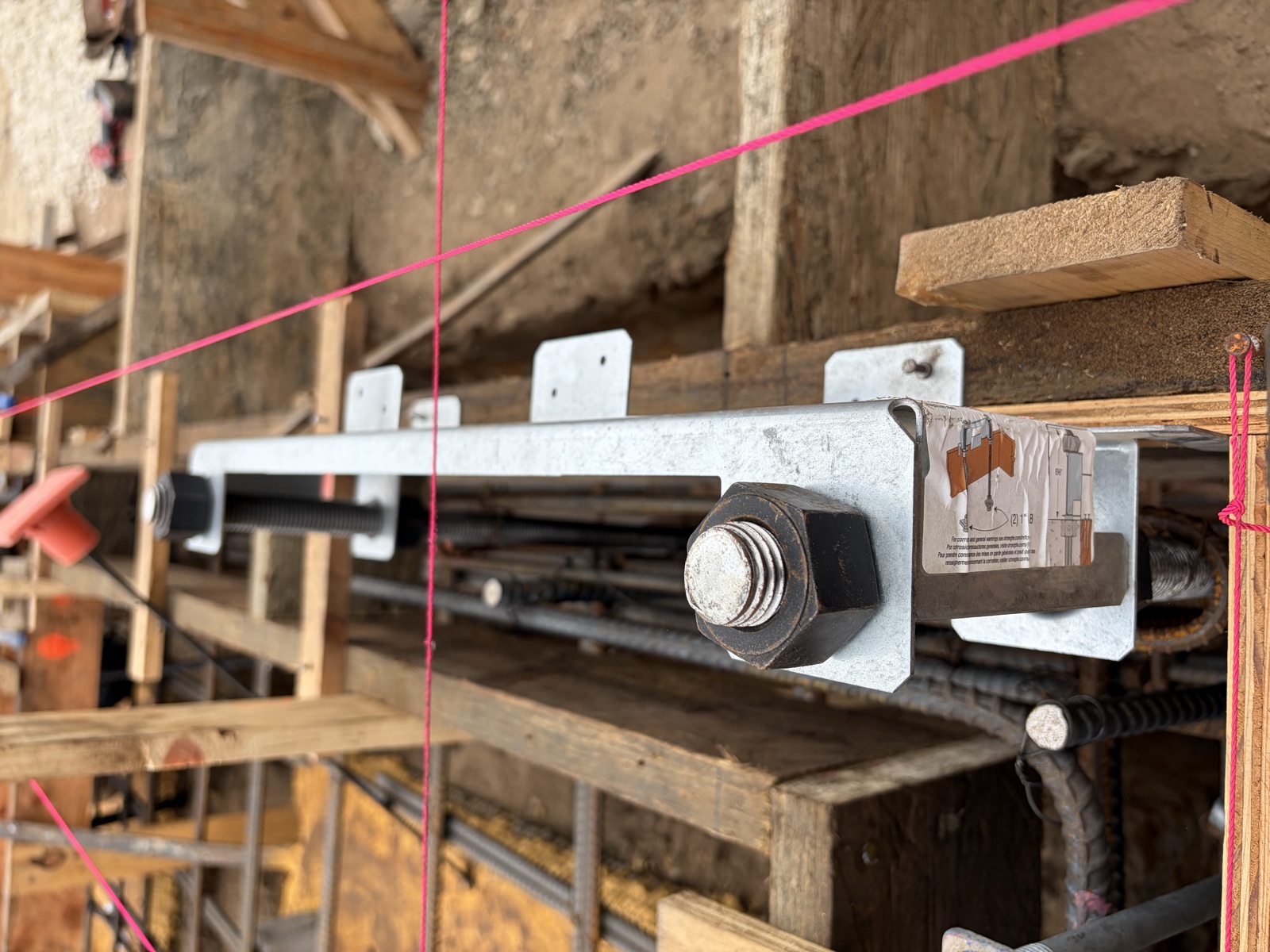
Some walls are mostly opening. A wall framed around a garage door, or built out of floor-to-ceiling glass, can leave a narrow strip of solid wall - sometimes just two feet wide. That strip still has to brace the house against wind and earthquakes, and at 24 inches a conventionally framed shear wall usually can’t do it. The fix is a prefabricated Strong-Wall, and the work that makes it possible happens long before the panel arrives - down in the concrete.
1. The Problem: Shear Strength in a Narrow Footprint
Houses don’t just carry weight down - they have to resist being pushed sideways. Wind against a wall and ground movement in an earthquake both create lateral load, the horizontal force that tries to rack a house over or slide it off its foundation.
The standard way we brace against that is a shear wall: studs sheathed in plywood or OSB and nailed off to a tight schedule. It works, but it needs width. Shrink the solid portion to 24 inches between a garage door and a window, and a framed shear wall can’t develop enough capacity to meet code in a high-wind or seismic zone.
A Strong-Wall - we use the Simpson Strong-Tie WSWH (High-Strength Wood Shearwall) - solves that. The WSWH24 packs the shear capacity of a much wider wall into a 24-inch panel.
2. What a Strong-Wall Is
A Strong-Wall is a prefabricated, engineered panel that arrives ready to install. Inside that 24-inch width is a code-listed assembly built to handle loads a stick-framed wall its size never could.
Two things make it practical on a real job:
- It’s a drop-in component. Instead of framing, sheathing, and nailing off a custom shear wall, the crew sets one engineered panel.
- It matches standard framing. The panel is the same thickness as a 2x4 or 2x6 wall (3.5” or 5.5”), so drywall inside and siding outside go over it with no special detailing.
Where a wall has a wide opening to brace, we’ll set a pair of panels - one on each side - so the opening sits between two anchored Strong-Walls.
3. It Starts in the Foundation
That’s the phase we’re in now: setting the anchorage before the pour. A Strong-Wall is only as good as what holds it down, and because it resists big loads in a small footprint, the forces at the base are severe. One side of that 24-inch panel wants to lift straight up (uplift) while the whole panel wants to slide. Those forces have to travel into the concrete, so the anchorage gets engineered right into the footing.
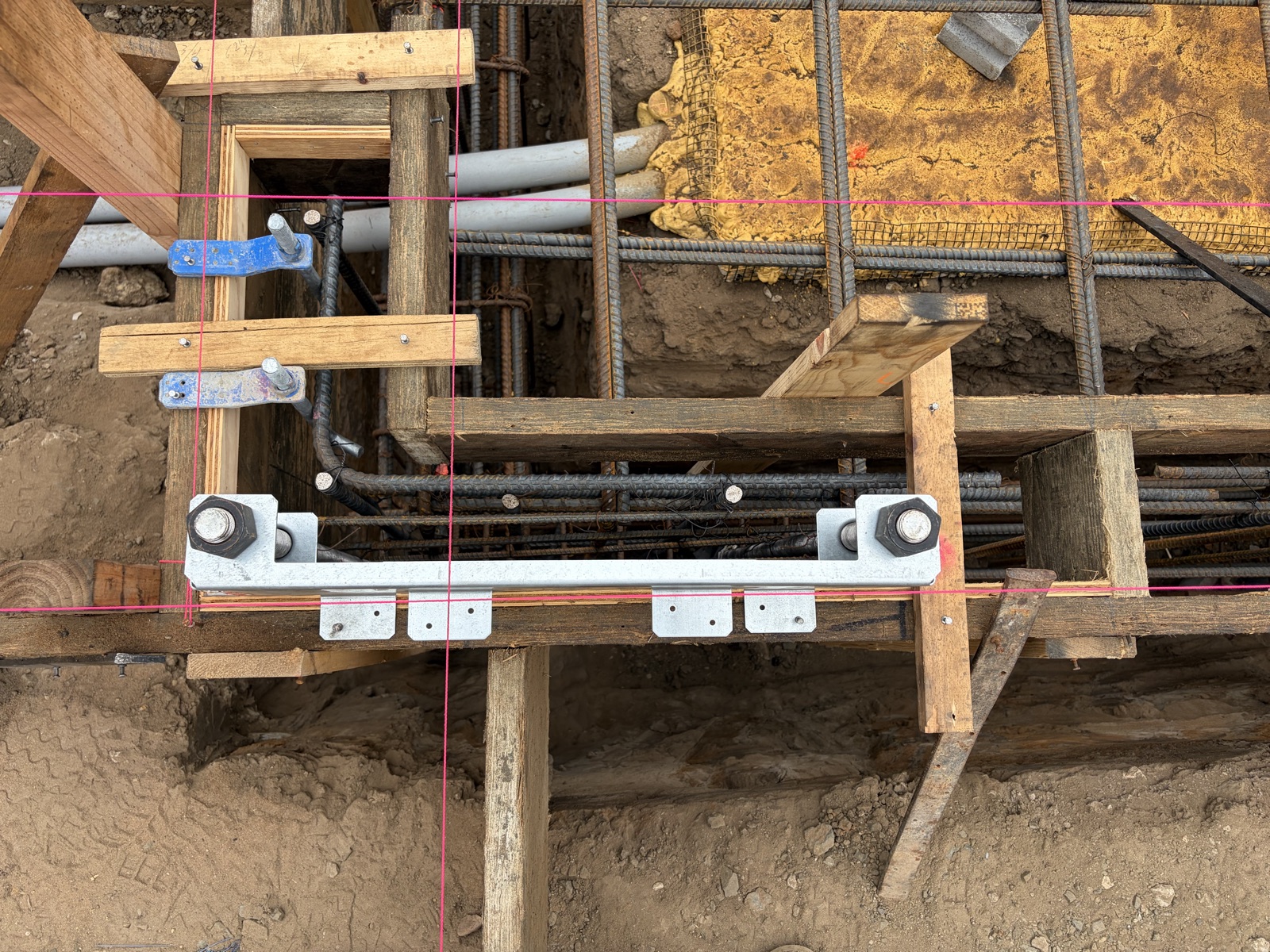
- Cast-in-place anchors. Heavy anchor bolts are set into the concrete exactly where the panel will land. The bolts tie into a reinforced cage - ties on each side of each anchor and continuous bars top and bottom - so the load spreads into the foundation instead of pulling against a single point.
- Templates hold the tolerance. The bolt spacing has almost no room for error. We use the manufacturer’s anchor-bolt template to lock the bolts in exact position while the concrete cures, so the panel drops over them later without a fight.
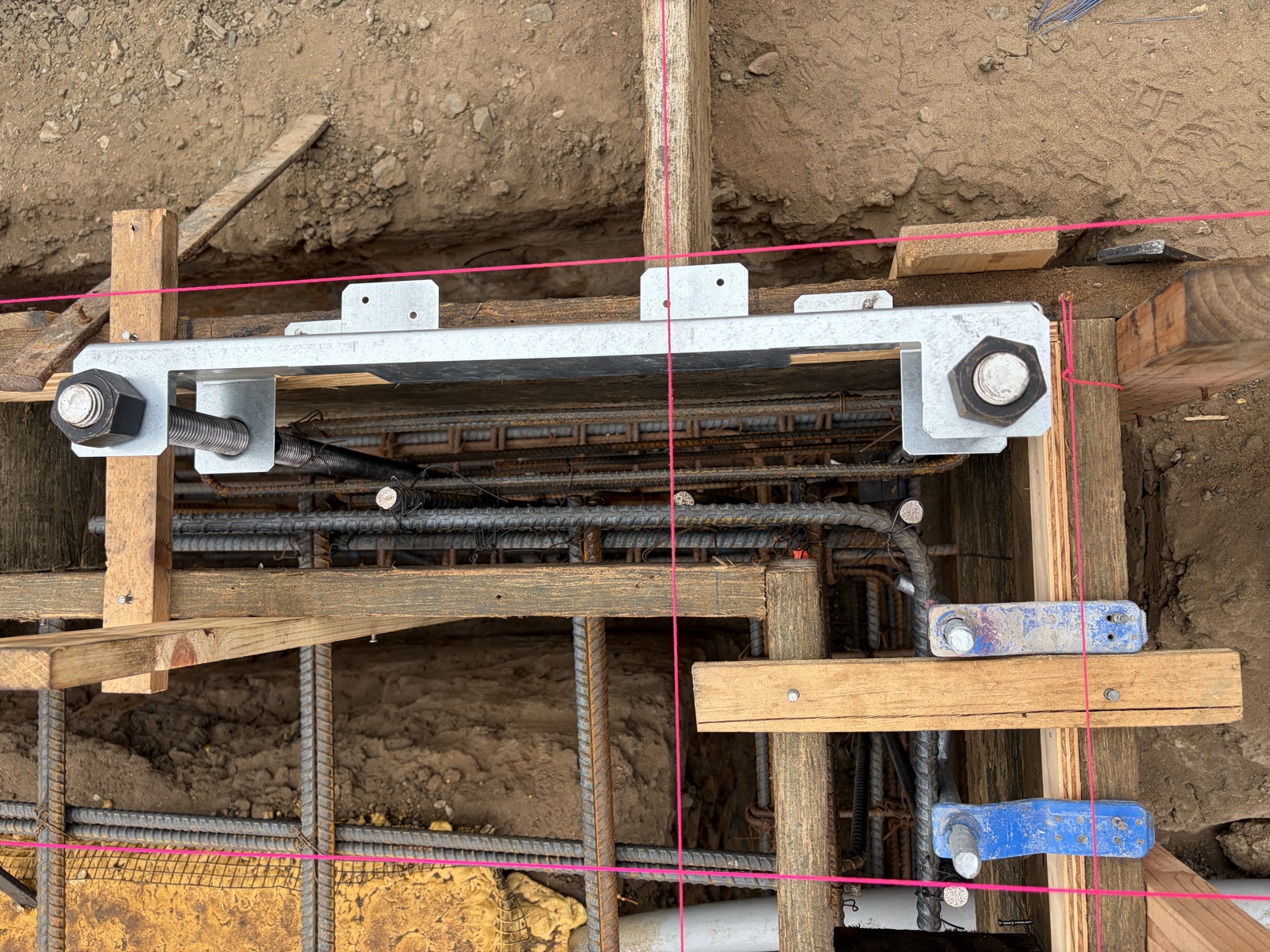
Get the anchor bolts wrong and there is no field fix - the panel either lands on them or it doesn’t. The template is not optional.
4. What Comes After the Pour
Once the concrete cures and framing starts, the Strong-Wall goes in like a structural plug. The panel lowers over the cast-in-place bolts, the heavy bearing plates drop over the bolts, and the heavy hex nuts run down to finger-tight plus a half turn - that’s the spec, not gut feel. The top of the panel then ties into the framing above, locking it top and bottom.
That completes the load path. When wind hits the roof or an earthquake shakes the upper floors, the force moves down through the framing, into the Strong-Wall, out through the anchor bolts, and into the footing we’re building now. Every connection in that chain has to be made for the path to hold - which is why the anchors get this much attention before any concrete goes down.
Key Takeaways
- Conventional shear walls need width; a Strong-Wall delivers that strength in a 24-inch footprint.
- The work that makes a Strong-Wall possible is the foundation work - the anchors are cast in place and have to be exact.
- Use the manufacturer’s template to hold anchor-bolt position while the concrete cures.
- Tie each anchor into a reinforced cage so the load spreads into the footing, not a single bolt.
- The panel only works later if the load path - framing to panel to anchor to footing - is continuous, and that starts with the bolts.
A Strong-Wall is what lets us build the wide-open, glass-heavy spaces clients ask for without giving up the home’s ability to stand up to wind and seismic load. Getting it right starts in the concrete.